From the ShelfPart 3 of 11
John Squire — Time Changes Everything: a quieter record by an artist's artist
John Squire, guitarist of The Stone Roses, made his first solo album in 2002. The man who let his frontman carry the band's voice for years finally sang in his own. This is one of those records you don't want to over-explain.
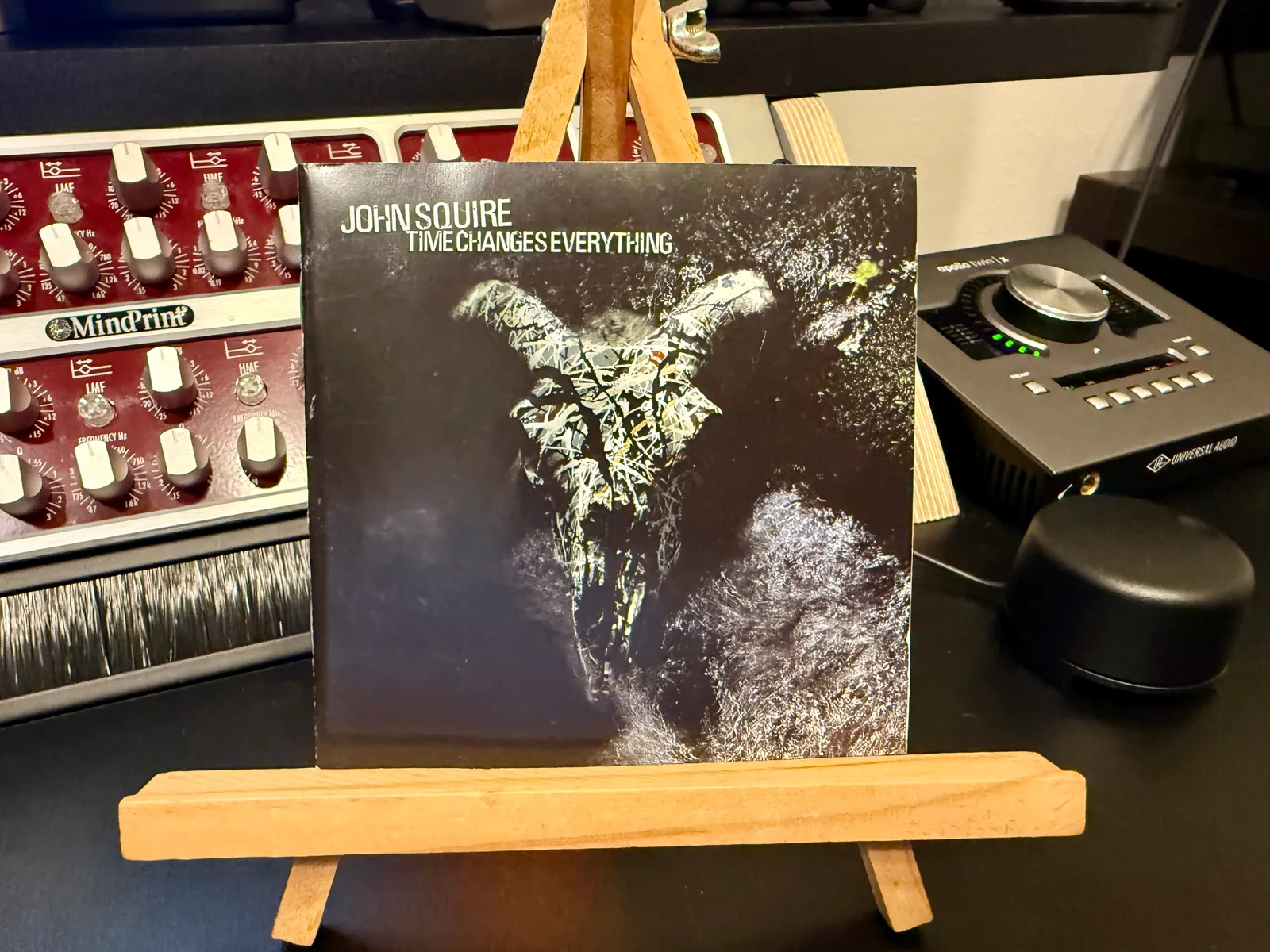
This is probably one of those albums where the less said, the better.
John Squire — guitarist of The Stone Roses, the band that came to symbolize the late-80s, early-90s Madchester scene out of the UK. In 2002, he released his first solo album: Time Changes Everything.
Plenty of people who know the Roses don't know this record exists. Which is part of why I wanted to write about it.
The Stone Roses, and the man named John Squire
For most listeners, the Roses' story circles back to the 2011 reunion. The vocalist, Ian Brown, and Squire — the long-running animosity between those two was well-documented, and the reunion announcement caught nearly everyone off guard.
If you want a closer parallel, look at the Gallagher brothers in Oasis: a long, public falling-out, and then, years later, a reunion. A soured partnership making peace in front of the music — even for those of us just watching, that's a special thing to see.
Ever since my student days, what kept me locked into the Roses' records was always John Squire's work. The guitar phrasing. The sound. The album artwork (he paints; that's his work). The way melodies are pieced together. Almost everything that came out of his hands, I loved. And it still shapes how I listen and how I try to make music today.
The kind of artist who lets someone else front it
If I had to put John Squire into one sentence, it would be this:
He's the kind of artist who hands the front of the stage to someone else, and lets that someone carry his overflowing talent.
Ian Brown, in the Roses, was exactly that someone. Squire's notes and lines passed through Brown's voice and reached the world. Squire wasn't out front — and yet, his fingerprints were all over what people heard.
This album is the moment that man stepped up to the microphone and sang, for the first time, in his own voice.
A voice that sounds wrung out of him
Squire's singing reminds me of Bob Dylan or George Harrison — that voice you have to push out, slightly cracked, no virtuosity to it.
He's not a "good singer" in the technical sense. He doesn't pretend to be. But there's a kind of song where the melody simply has to be carried by the voice of the man who wrote it. There has to be a reason. The songs on this album have that reason in them.
Try track one, "Joe Louis", first. If something registers, listen through. If not, this is probably an album waiting for you on a different day. How this hits varies a lot from person to person. So I'd rather not over-explain it. Better to leave room for whoever is listening to find their own distance.
A guitarist's footnote — Gretsch by sight, Stratocaster on tape
A small note from someone who plays guitar.
The visual signature of Stone Roses-era Squire is a Gretsch semi-hollow body. Live footage, photo shoots, album imagery — that big-bodied guitar in his arms is how a lot of us remember him.
But I once read somewhere that on the actual recordings, he was using a Fender Stratocaster.
Reading that, something fell into place.
Yeah, you can't get that sound out of a semi-hollow with humbuckers.
Visually, the Gretsch is right. But the way Squire's tone holds in the midrange, the sharp edges of his lines — that's a Strat thing, to my ear. He pulls a thick tone from a bridge pickup most players get a thin sound out of, and that approach quietly shaped my own guitar sound.
On this solo album, you can hear the same combination — syrupy mids and bright, precise edges in the same passage. A guitar sound that's rooted in rock but breathes the cool, damp air of the English countryside — a sound that could only be his.
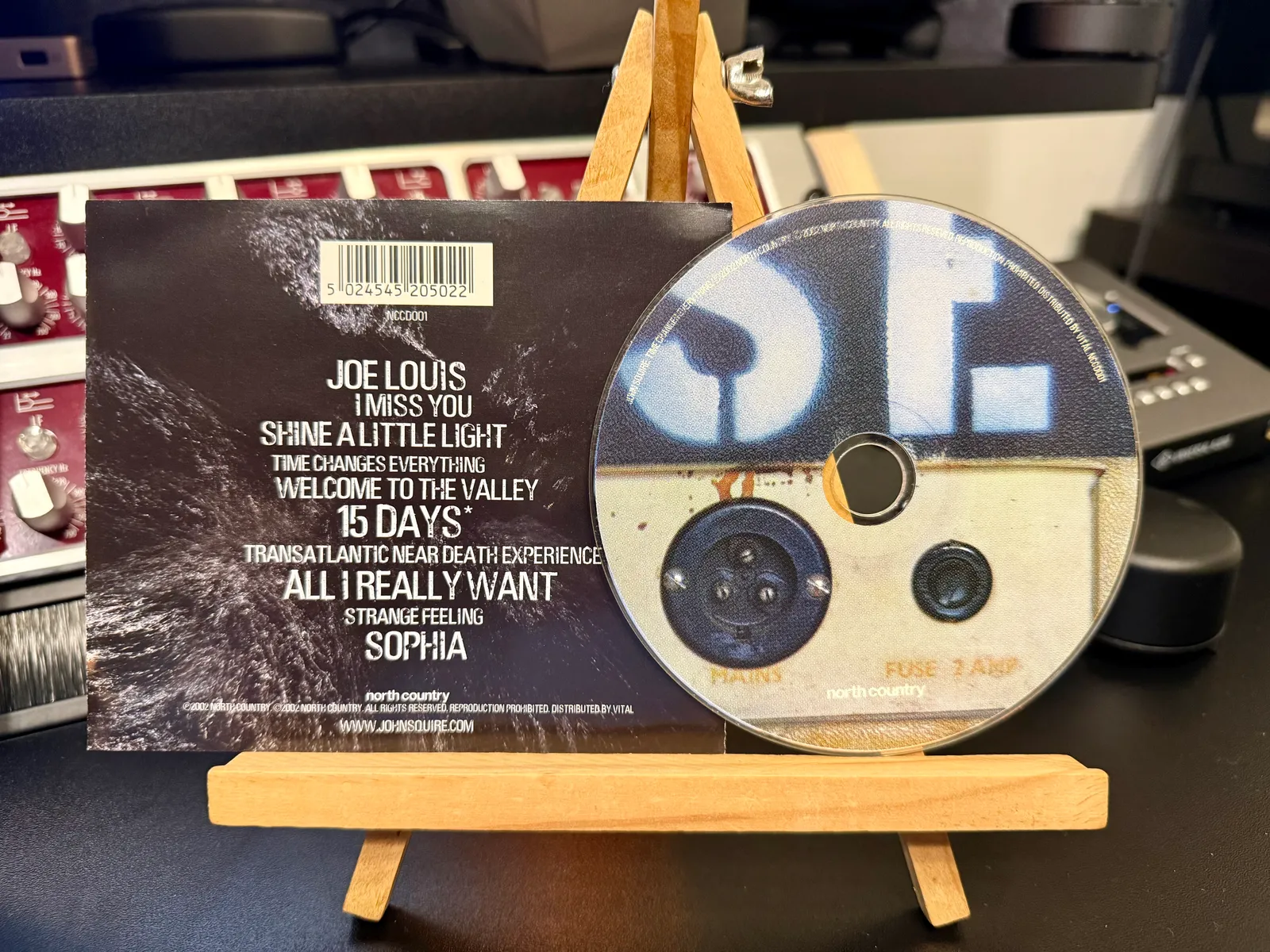
An artist's artist
John Squire is, to me, an artist's artist — the kind of musician other musicians quietly love.
He's not a flashy frontman. He doesn't show up everywhere. But anyone making music who has spent time with his work has carried something away from it. As a guitar player myself, what I got from John Squire hasn't gone anywhere.
Pick another one off the shelf
That's entry two of the From the Shelf series. There is a lot more I could say about this album, but I'm going to stop here. Some albums need to keep space open for the listener. This is one of them.
Next disc — undecided. I'll open the closet, see what catches my eye, and bring another one out.
Listen